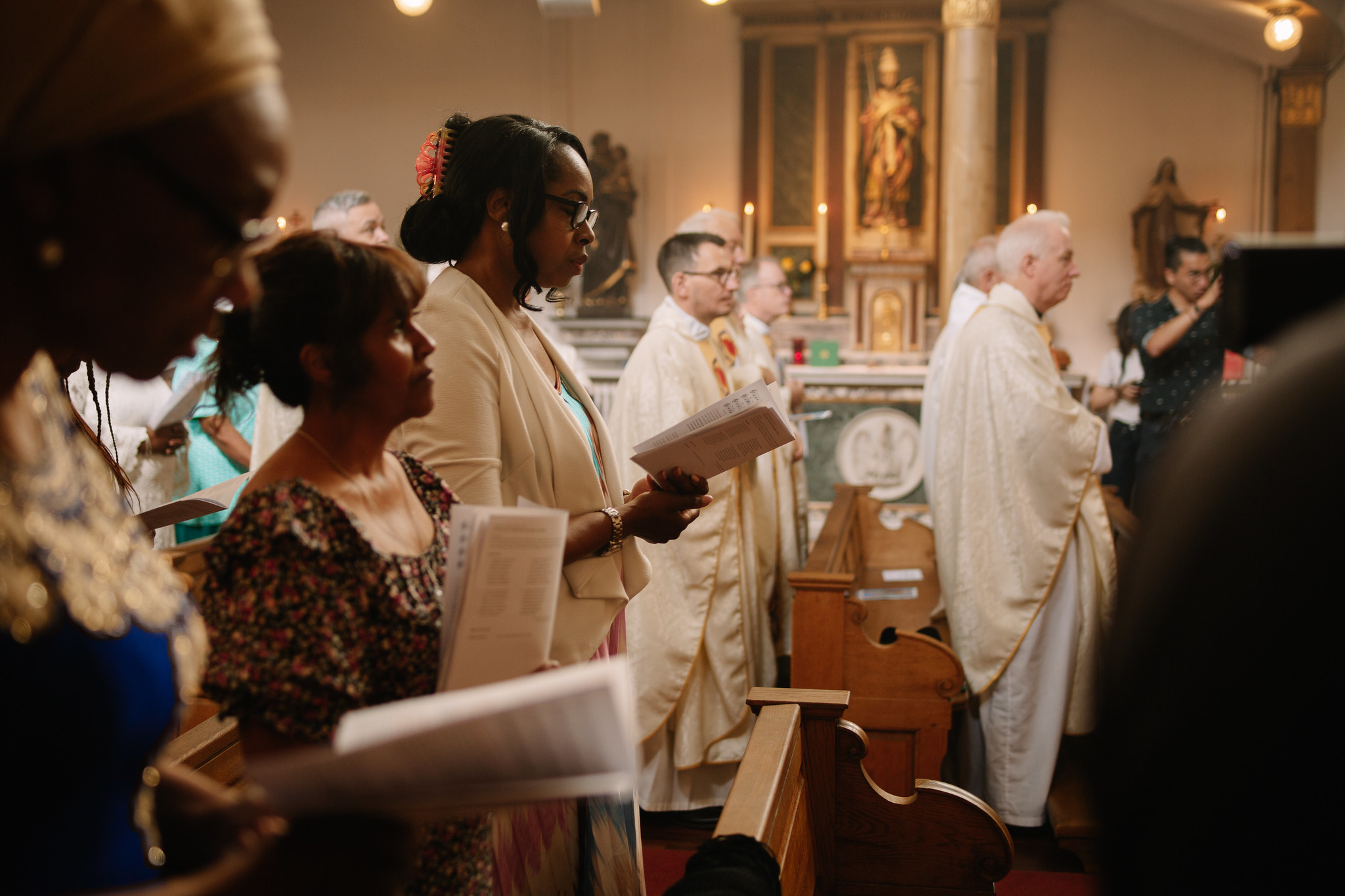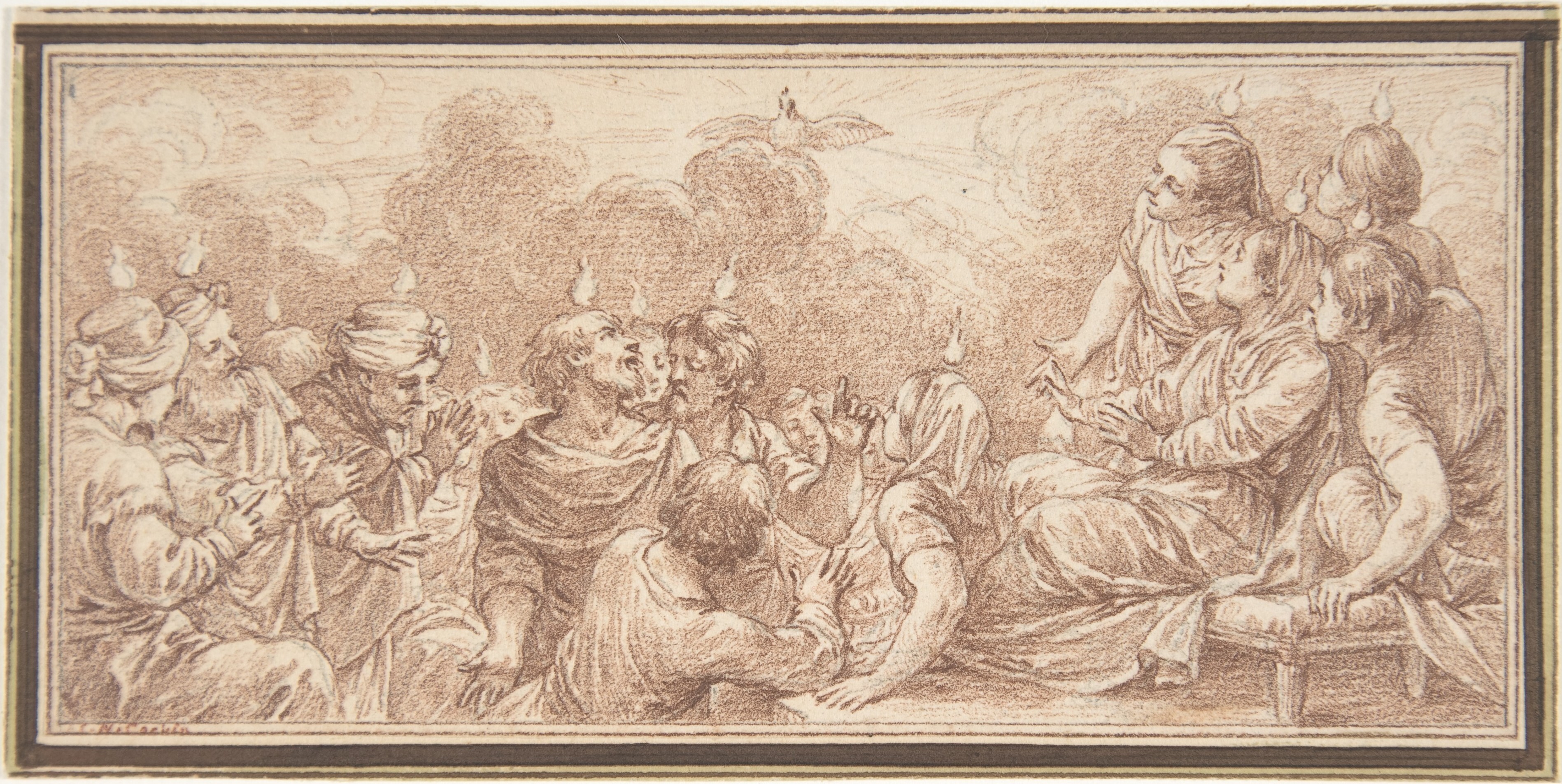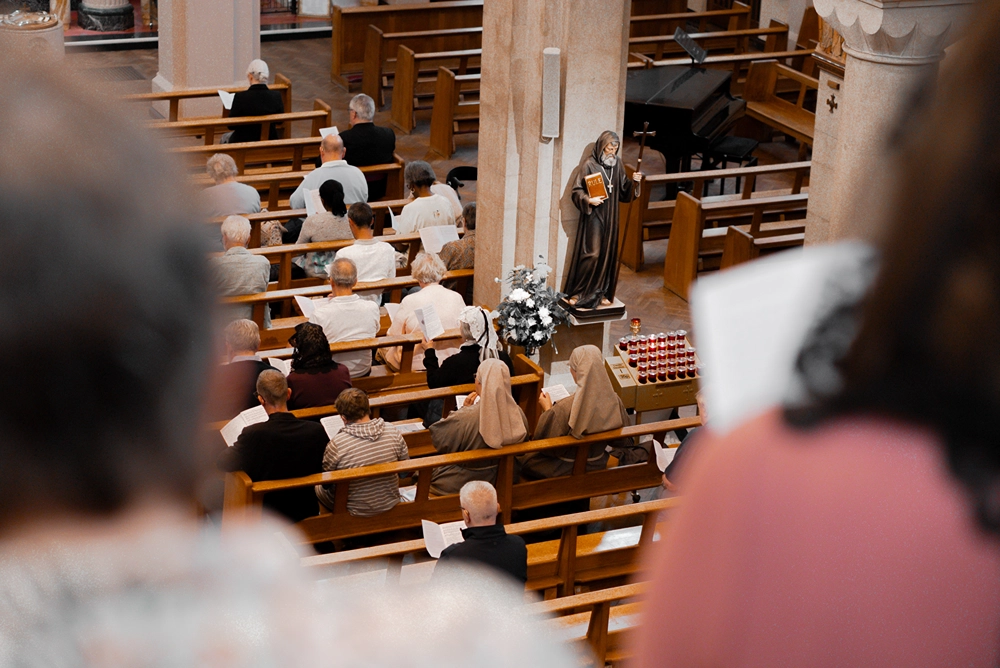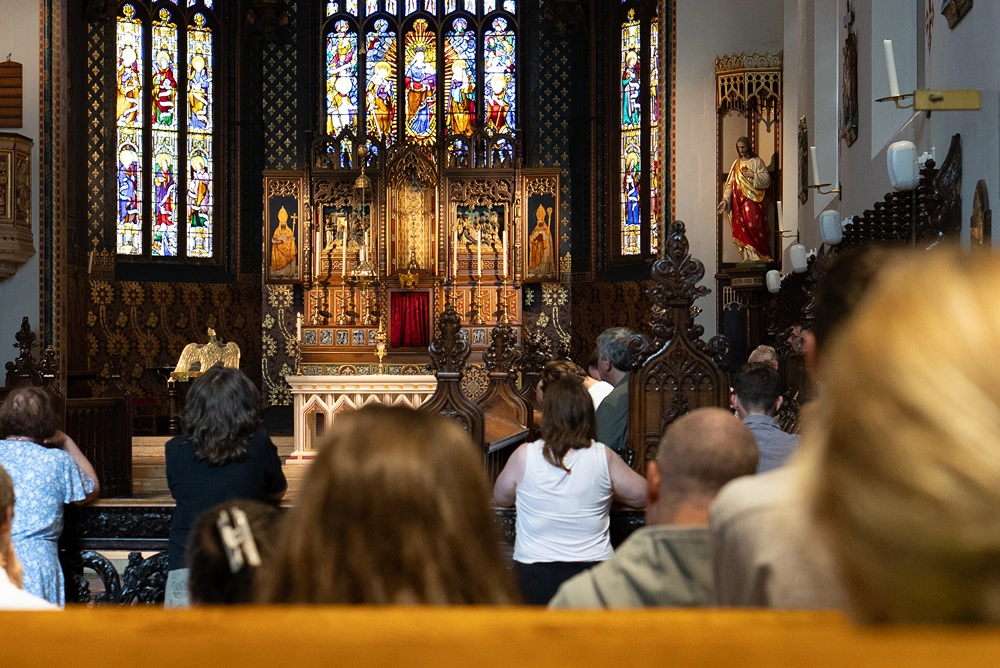
The start of January is often riddled with post-celebration blues, the unenthusiastic gathering of energies to return to work, and the distinctly mundane task of packing away Christmas decorations. But on the first Sunday of January in Coventry, a day of joy for the Coventry Ordinariate Mission as five came forward to be baptised by Bishop David. "It was a joyful and beautiful moment for those being baptised, for the Ordinariate Mission and for me personally.” said Fr Paul Burch, reflecting on the occasion.
At the heart of the celebration was a family: mum and dad, and two teenagers - four lives entering the Church together. Alongside them came a fifth person, James, in his mid-thirties. Five baptisms. Five deliberate “yeses.” And, as Fr Paul put it, “a real privilege to accompany them.”
The family’s story is increasingly familiar in today’s Britain. Not one of rejection of faith, but more of absence. They had not been raised with a living faith, though there were faint threads - a lapsed Catholic grandparent, a distant childhood connection to the church building which Sonia (the mother of the family) had remembered coming to as a child… and to which she now returned with joy, anticipation - and her family.
They experienced Holy Week and Easter at All Souls the previous year - an intense introduction to the heart of Christian faith - and then committed themselves, over many months, to learning, prayer, and preparation. Week by week, as individuals and as a family, they took steps toward baptism.
It is the kind of story that quietly challenges despair. People do still come. Families do still arrive together. Grace still gathers households, not just individuals.
The fifth person baptised, James, came with a story of return that mirrored the theme of Epiphany itself.
His father had been baptised Catholic but long lapsed. After the death of his wife, something stirred. He came to All Souls, found welcome and friendship - but knew he could not simply slip back into the sacramental life of the Church without honesty and healing.
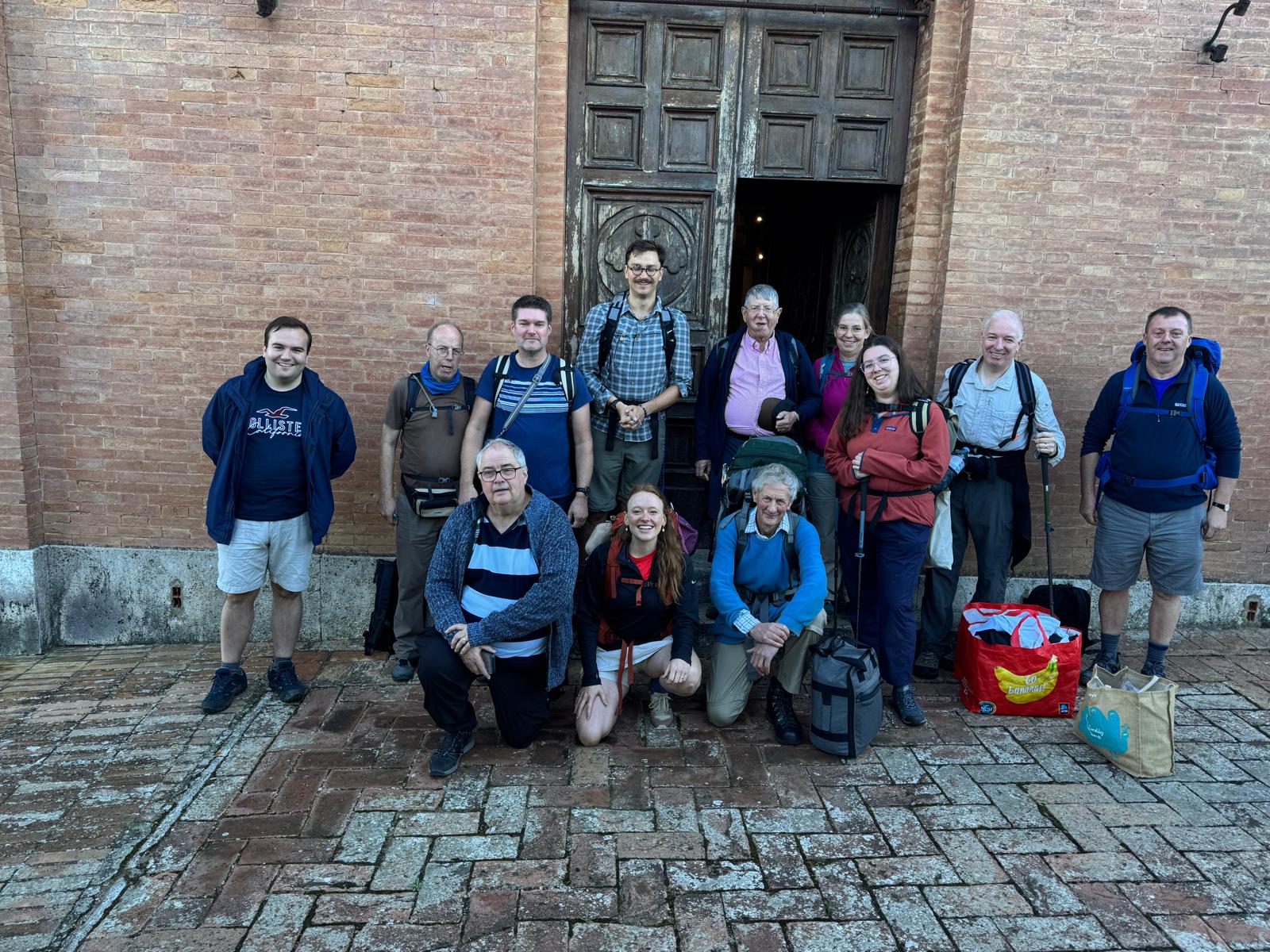
That journey eventually took the form of a pilgrimage with the Ordinariate from Siena to Rome, which some readers may remember following last September and October. It was a journey that was both physical and spiritual. And now, months later at the dawn of a new year, his son came forward to be baptised.
There was “a sense of both of them having a fresh beginning” as Fr Paul remarked - father and son, each responding to grace in their own way.
After the Mass and baptisms, the day continued with another beloved tradition: Nine Lessons and Carols, celebrated by candlelight, with Bishop David in attendance.
For those unfamiliar with it, Nine Lessons and Carols is a service that tells the story of salvation - from humanity’s fall, through God’s promises, to the birth of Jesus - using nine short readings from Scripture interwoven with carols and hymns. First devised in 1880 by Edward White Benson, later Archbishop of Canterbury, it has since been adapted by churches around the world. The most famous version is broadcast each Christmas Eve from King’s College, Cambridge.
But at All Souls, this was not something to watch - it was something to enter.
“It’s an opportunity just to sit with the Word of God,” Fr Paul explained, “to sing beautiful hymns, and to soak up what the Incarnation really means.”
In a culture - and even within Catholic life - that is often intolerant, indifferent or passive when it comes to holy mystery, services like Nine Lessons and Carols offer something vital. They are not Mass, but they are deeply liturgical: deliberate services set aside not for explanation or efficiency, but for contemplation, beauty and encounter. They allow worshippers to dwell with Scripture and the sacred in a way that opens the heart, rather than rushing it.
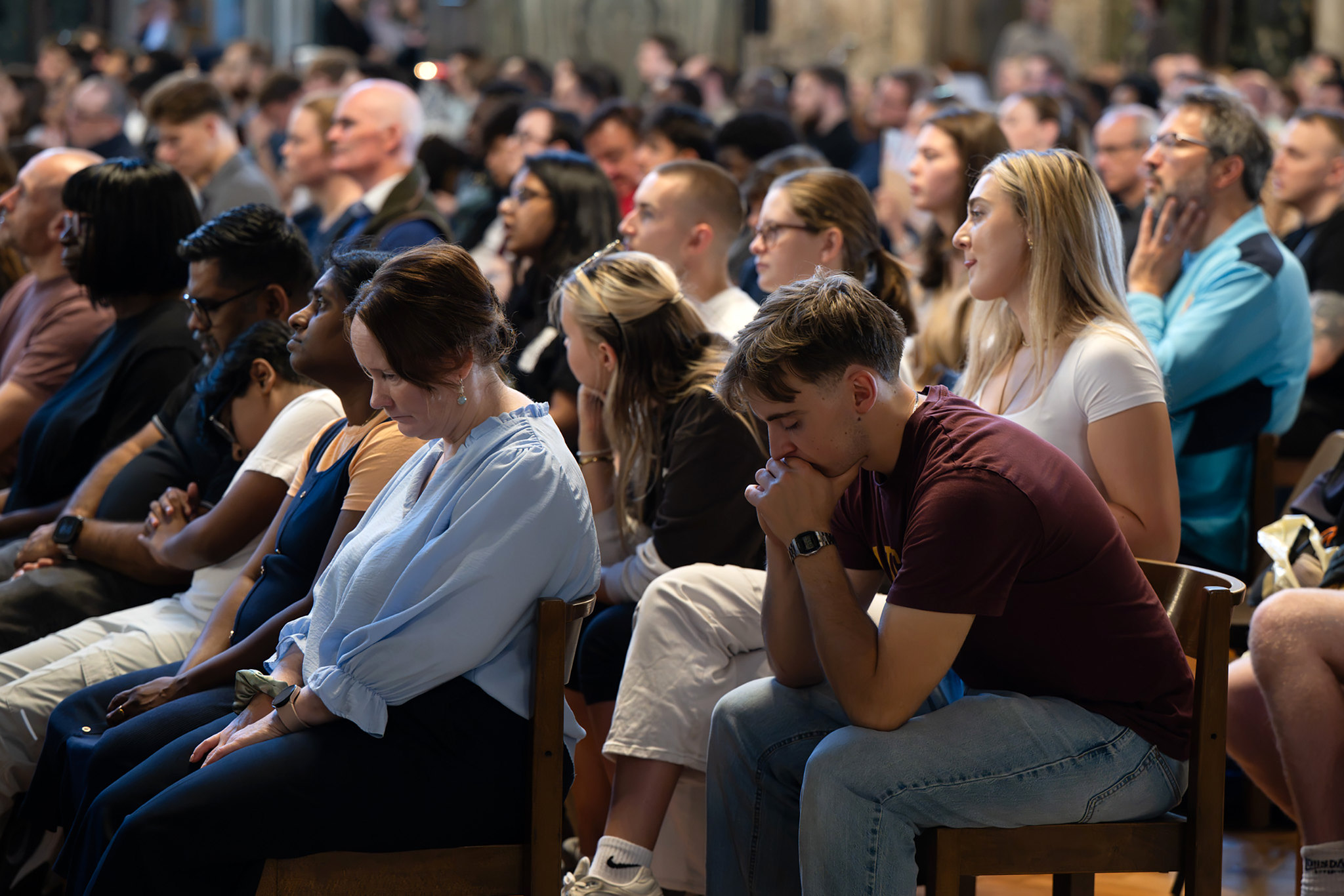
Around 80 people came - an encouraging number for early January, when many assume Christmas is already over. For the Ordinariate, however, Christmastide is not a season to be wrapped up quickly, but a mystery to be lingered over.
Fr Paul is candid that ministry holds contrasts. In the same period as this joyful celebration, he also encountered more challenging pastoral moments in the parish - reminders that faith can sometimes grow thin or become purely functional.
And yet, he refuses to let that be the final word. The Epiphany baptisms point to something deeper: “the shoots of new growth are very new,” he reflected - often appearing among those with little or no prior connection to the Church.
As the candles were extinguished and the cold reclaimed the streets outside, something enduring remained. Five new Catholics. A community renewed. And a quiet, stubborn hope - rooted not in optimism, but in the simple truth that God is still calling, and people are still responding.
.jpeg)
The start of January is often riddled with post-celebration blues, the unenthusiastic gathering of energies to return to work, and the distinctly mundane task of packing away Christmas decorations...
Dear Brothers and Sisters,
Happy New Year!
On 15th January we celebrate the 15th anniversary of the erection of the Personal Ordinariate of Our Lady of Walsingham, a few days later we begin the annual Week of Prayer for Christian Unity; as we mark these two events we need to be clear that they are connected: the Ordinariate is the realisation of that Christian Unity for which we have prayed and a model for that unity of the entire Body of Christ which has yet to be accomplished.
At the very beginning of the Apostolic Constitution Anglicanorum Coetibus, in which Pope Benedict XVI formally announced his intention to establish Personal Ordinariates for groups of Anglicans seeking unity, he beautifully explained that such a quest was the work of the Holy Spirit and he also explained how Unity is a characteristic of the Church and the successor of Peter is bound to promote and enable that unity:
In recent times the Holy Spirit has moved groups of Anglicans to petition repeatedly and insistently to be received into full Catholic communion individually as well as corporately. The Apostolic See has responded favourably to such petitions. Indeed, the successor of Peter, mandated by the Lord Jesus to guarantee the unity of the episcopate and to preside over and safeguard the universal communion of all the Churches, could not fail to make available the means necessary to bring this holy desire to realization.
The Church, a people gathered into the unity of the Father, the Son and the Holy Spirit, was instituted by our Lord Jesus Christ, as “a sacrament – a sign and instrument, that is, of communion with God and of unity among all people.” Every division among the baptized in Jesus Christ wounds that which the Church is and that for which the Church exists; in fact, “such division openly contradicts the will of Christ, scandalizes the world, and damages that most holy cause, the preaching the Gospel to every creature.” Precisely for this reason, before shedding his blood for the salvation of the world, the Lord Jesus prayed to the Father for the unity of his disciples.
It is the Holy Spirit, the principle of unity, which establishes the Church as a communion. He is the principle of the unity of the faithful in the teaching of the Apostles, in the breaking of the bread and in prayer. The Church, however, analogous to the mystery of the Incarnate Word, is not only an invisible spiritual communion, but is also visible; in fact, “the society structured with hierarchical organs and the Mystical Body of Christ, the visible society and the spiritual community, the earthly Church and the Church endowed with heavenly riches, are not to be thought of as two realities. On the contrary, they form one complex reality formed from a two-fold element, human and divine.” The communion of the baptized in the teaching of the Apostles and in the breaking of the eucharistic bread is visibly manifested in the bonds of the profession of the faith in its entirety, of the celebration of all of the sacraments instituted by Christ, and of the governance of the College of Bishops united with its head, the Roman Pontiff.
This single Church of Christ, which we profess in the Creed as one, holy, catholic and apostolic “subsists in the Catholic Church, which is governed by the successor of Peter and by the Bishops in communion with him. Nevertheless, many elements of sanctification and of truth are found outside her visible confines. Since these are gifts properly belonging to the Church of Christ, they are forces impelling towards Catholic unity.”
(Benedict XVI – Anglicanorum Coetibus).
During his 2010 visit to Great Britain, Pope Benedict, addressing the Catholic Bishops, referred to the intended Ordinariate as “Prophetic”. The Ordinariate is prophetic, because despite its smallness, it is the only example in the West of Realized Ecumenism. The Ordinariate is not some independent body “in communion with the Catholic Church” – rather it is part of the communion which is the Catholic Church. Fully part of the Catholic Church, founded by Jesus Christ and under the authority of Peter. Yet, whilst fully part of the Church, the Ordinariate retains elements of the Anglican Patrimony, it owns those things which nurtured her members and their forebears in the catholic faith during the centuries of separation. And because the Church is communion, those elements of Anglican Patrimony now belong to the whole Church as treasures to be shared.
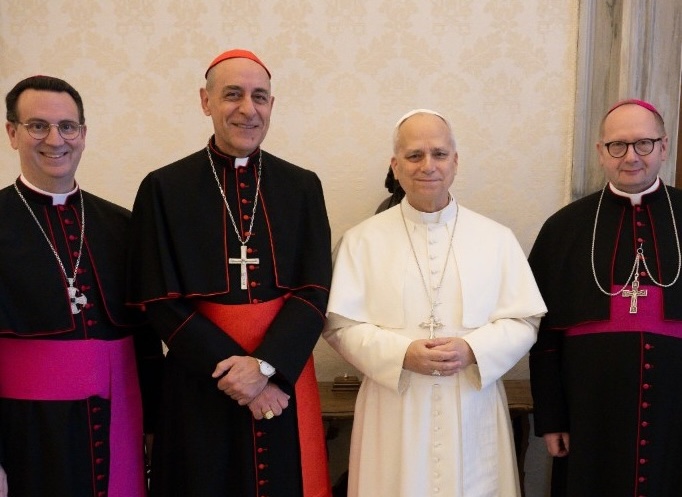
Those who were present at my Episcopal Ordination, will have heard Cardinal Fernandez further reflect on these themes:
The path toward full participation in the gift of Apostolic Succession—with all the other treasures that our Catholic Church has in fullness—has been a central part of the journey of this Ordinariate community.
To accommodate requests from groups of Anglicans who wished to enter into full communion with the Catholic Church, the Holy See established the Ordinariate as similar to a Diocese, which the Second Vatican Council defines as “a particular church in which the one, holy, catholic, and apostolic Church of Christ is truly present and operative.”
At the same time, this “portion of the People of God” is structured to enable Anglicans, who were entering into full communion with the Catholic Church, to preserve elements of what Pope Saint Paul VI described as “the legitimate prestige and worthy patrimony of piety and usage” proper to the Anglican Communion.
These reflections highlight two crucial dimensions of the life of the Ordinariate. On the one hand, as an integral part of the Catholic Church, the Ordinariate has a mission to collaborate with other particular Churches “in which and from which the one and only Catholic Church exists.”
At the same time—in the words of the Apostolic Constitution Anglicanorum coetibus—the Ordinariate is invited to see the positive aspects of the Anglican tradition preserved in it “as a precious gift […] and as a treasure to be shared.”
The existence of the Ordinariate, thus, reflects a profound and beautiful reality about the nature of the Church and the inculturation of the Gospel, as a rich English heritage.
For, the Church is one, and the Gospel is one, but in the process of inculturation, the Gospel is expressed in a variety of cultures. In this way, the Church acquires a new face, as Pope Francis teaches in Evangelii Gaudium:
“The history of the Church shows that Christianity does not have simply one cultural expression […]. In the Christian customs of an evangelized people, the Holy Spirit adorns the Church, showing her new aspects of revelation and giving her a new face.”
In this process, the Church not only gives but is also enriched. For, as Saint John Paul II taught, “every culture offers positive values and forms which can enrich the way the Gospel is preached, understood and lived.”
In the case of the Ordinariate, the Catholic Faith is inculturated by people who experienced the Gospel in the context of the Anglican Communion. As they entered into full communion with the Catholic Church, it was enriched.
We can say, therefore, that the Ordinariate represents one of the faces of the Church, which, in this case, receives certain elements of the rich history of the Anglican tradition: elements that are now lived out in the fullness of Catholic communion.
For this same reason, when considering the unique nature of the Ordinariate, we should also always see it in the broader context of its integral participation in Catholic communion. Because of this, to remain true, its ecclesial life must always work for the unity of the Church.
This happens when the Ordinariate prays, lives, and works in communion with other local Churches to favour the common growth of the spiritual life, fraternal life, and the work of evangelisation of the same territory.
This collaboration favours the vital “exchange of gifts” through which—as Pope Francis teaches—“the Spirit can lead us ever more fully into truth and goodness.”
( Homily of His Eminence, Cardinal Víctor Fernández for the Episcopal Ordination of Bishop David A. Waller, Bishop of the Personal Ordinariate of Our Lady of WalsinghamWestminster Cathedral, London – 22 June 2024)
Brothers and sisters, as we enter our 16th year, and as we keep the Week of Prayer for Christian Unity, let us do so with thankful hearts, full of joy in the gift of the Ordinariate. God has led us into the unity which is His Church and it is our bounden duty to be a prophetic voice, bearing witness to the Unity for which Christ prayed and by being agents for that full unity of the Body of Christ for which he longs.
In Christ,
+ David

Dear Brothers and Sisters, Happy New Year! On 15th January we celebrate the 15th anniversary of the erection of the Personal Ordinariate of Our Lady of Walsingham..
Dear friends
When my nieces were young they always enjoyed having stories read to them; to this day I can remember the names of all the farmyard animals who, having been consumed by Foxy Loxy, “never did get to tell the King the sky was falling in”! One of their favourite books began with the words “Once upon a time in a land far far away there lived a beautiful princess.” The opening words draw the listener into a different almost magical realm – the events happen “ once upon a time” they are not given a time or date; the place is far away – unidentified – away from and inaccessible to the child’s experience; the key character, the Princess, is someone the child longs to be but never will be and whose story is far removed from present or future real life experiences.
There is much about Christmas celebrations that is “magical” : the shop window displays; street lights; office parties; visits to Santa (who then brings presents from afar). Most of that is harmless fun but at the heart of Christmas lies a different story – not a fairy tale but truth. It never ceases to amaze me how St Luke, in the early chapters of his gospel, goes to great lengths to root the incarnation in human history. There is nothing “once upon a time” about the Incarnation, it happens in real time: Herod is on the throne, Augustus is the emperor, Quirinius is governor of Syria. The places are real – Nazareth and Bethlehem. God takes our human nature – Jesus is not removed from human experience but identifies with it: And he feeleth in our sadness and he shareth in our gladness.
Those fundamental truths which St Luke sets before us are truths we need to hold on to as we celebrate Christmas. Not as kill-joys: there is nothing wrong with all the tinsel and trimmings. But the reality of our celebration is that there has been born a Saviour, Emmanuel, God With Us. It is Jesus who comes to live and die and rise for us; to do so in our flesh, in human history in order to release us from the confines of temporality and open for us the gates of eternity.
The World needs to hear this truth – myths and legends – crossed fingers and wishes – wealth or credit card debt – do not bring salvation. But God has acted, the Word became flesh annd dwelt among us; in the womb of the Virgin Mary he took our humanity and he has raised it now to the glory of Heaven.
Be assured of my prayers as we journey through Advent and come to celebrate Christmas; may this Christmas rekindle in us joy that God has been born among us and that thereby hope can never be a distant thing like a fairytale but is immediate, life transforming, the pledge of immortality.
With blessings this Advent and Christmas
+ David

Dear friends, When my nieces were young they always enjoyed having stories read to them; to this day I can remember the names of all the farmyard animals who...
British Catholics should welcome the newly published report commissioned by the St Barnabas Society and written by Stephen Bullivant; Fernanda Mee and Janet Mellor The report considers the experiences of clergy and religious, who have converted from other denominations and provides some interesting statistics:
• c. 700 former clergy and religious of the Church of England, Church in Wales, or Scottish Episcopal Church have been received into the Catholic Church since 1992.
• The number includes 16 former Anglican bishops and two Continuing Anglican bishops (as of December 2024).
• There were an estimated 491 ordinations of former Anglican clergy in the Catholic Church during the years 1992 to 2024 (5 Permanent Deacons, 486 priests).
• c. 29% of diocesan priestly ordinations from 1992 to 2024 in England and Wales were former Anglican clergy.
• c. 35% of combined diocesan and Ordinariate priestly ordinations from 1992 to 2024 in England and Wales were former Anglican clergy.
• 9% of diocesan priestly ordinations from 2015 to 2024 in England and Wales were former Anglican clergy.
• 19% of combined diocesan and Ordinariate priestly ordinations from 2015 to 2024 in England and Wales were former Anglican clergy.
However, what sets this report apart and makes it such a valuable document is that the writers clearly understand that, behind the statistics, are human beings: men who have left Anglican ordained ministry and entered into the full communion of the Catholic Church; each has a story to tell and the vast majority have benefited in some way from the support of the St Barnabas Society. At times such conversions have been more of a trickle whilst at other moments large numbers have come in a single year. In the 1990s, some (by no means all) received compensation payments from the Church of England – none of those coming in the 21st Century brought financial support with them. Clergy gave up homes and incomes and guaranteed pensions to become Catholics and in many cases they had wives and dependants to support. It is true to say that many were dependant on the St Barnabas Society and its work continues.
In his Foreword, Cardinal Vincent Nicholls reflects on the term “convert clergy” noting that ,whilst the phrase is commonly used and well understood, it is not completely accurate as a description of the clergy in question, noting that it is – not so much a turning away or rejection of their rich and precious Anglican heritage but an experience of an imperative to move into the full visible communion of the Catholic Church, in union with the See of Peter. The Cardinal’s point is important given the prominent misunderstanding that the men in question have left their previous denominations because of certain issues e.g. ordination of women or matters relating to human sexuality. The truth is that the fundamental reason behind the vast majority of these conversions was the realization that to be fully the Church it was necessary to be in communion with Peter and it was becoming equally apparent that the Anglican Communion was moving ever further away from the possibility of such communion.
The Report identifies a steady number of converts over the years but also reflects on 2 occasions when numbers greatly increased: the 1990s (after the decision in the Church of England to ordain women) and 2010/11 (after the papal visit and the erection of the Ordinariate.) For many, the Ordination of women was the final proof that unity between Anglicans and Catholics was on the back burner, that it no longer made sense to wait for the day when all would be in communion with Peter and thus it became an imperative to seek that communion individually. The St Barnabas Society was generous in its help and indeed some of those who benefited from its generosity later became directors of the Society.
Others, equally clear of the necessity of Communion with Peter opted to remain in the Church of England a while longer to see if it was possible to salvage something of the hope of corporate reunion, knowing that this would be dependant on a willingness from Rome to now engage in ecumenical conversations with groups rather than entire denominations. It was down to the keenness of some Anglicans to seek a corporate solution and the amazing generosity of Pope Benedict XVI that the Apostolic Constitution was published, providing the means for such unity via the establishment of the Ordinariate in January 2011.
The Ordinariate is much more than an alternative way of coming into full communion; Pope Benedict referred to it as “prophetic” – it is to date the only model of realized ecumenism in the West. At its heart it is an acknowledgement that there was much in Anglicanism that nurtured us in the faith and led us to see that we had to seek communion with Peter. Therefore an Ordinariate (basically a nationwide diocese) provides for reception into the Catholic Church whilst retaining aspects of the Anglican patrimony which are not contrary to the Catholic Faith. The first wave of those coming into the Ordinariate presented a particular challenge to the St Barnabas Society, which it was quick to identify and embrace: for whilst the clergy being received via the Ordinariate were not in the longterm a greater demand on the Society’s resources than if they had come via dioceses, the number coming at once was unprecedented and the Society should be congratulated on its willingness and ability to rise to the challenge.
The report contrasts the processes of reception in the dioceses and the Ordinariate, noting the speed of those first ordinations and the frustrations of some who were in formation via dioceses and now found those in the Ordinariate being ordained quickly. To be fair, it has to be noted that many of the Ordinariate clergy made significant sacrifices: their journey was an ecclesial one; bishops, priests and people leaving Anglicanism for a new life in the Catholic Church. Priests were ordained quickly so that they could continue to minister to their flock. Also they continued in part-time formation for 2 years after ordination whilst at the same time guiding their fragile communities through transition; earning their keep either in parishes or chaplaincies; moving house and many of them responsible for wives and children. Those days were full of grace but also of significant sacrifice and should not be seen as a soft option.
A strength of the report is that it looks to the future; the Society continues to support convert clergy both in dioceses and the Ordinariate and it needs to have some pointers as to the needs it will be asked to meet. The authors are clear that evidence suggests that there will still be a steady flow of Anglican clergy entering the Catholic Church and from my position as the Bishop of the Ordinariate I know of several men in the pipeline.
A further issue which the report looks at is the need to meet needs and care for those convert clergy after ordination. This is not a current priority for the St Barnabas Society in so far as they rightly prioritise their funds for help new converts who are those most in need. After Ordination priests are cared for by their diocese. However, this is the next challenge for the Ordinariate and, I hope, for those who support our work or benefit in someway from our ministry. We do not have the assets dioceses have been able to accrue over the years and we do need to turn our attention to funding clergy formation – we have young seminarians. Also we need to be able to look after our clergy in sickness and retirement – so far we have managed to raise £1 million but that will not go far in housing and funding retired clergy – the trustees of various clergy common funds have denied our priests access to those schemes. All will be well for God provides. But, there are still clergy coming and sacrifices being made.
Another, aspect of the future is that many potential ordinands will have been nurtured by the convert priests of whom the report speaks. Those who converted some years ago have now completed many years as parish priests or chaplains – they have been a positive influence on many and we are seeing a second generation of priests benefiting from that which the society made possible. Also, I am in conversation with a number of young men who have been exploring ordination in the Church of England and, as they look beyond the security of their own parish, they realise they need to become Catholics. Might it be that we see a growth in the number of Anglicans converting before formation?
I am not a prophet. However, one can never doubt that the Lord who has blessed the past will most surely bless the future. This report highlights how much the Church has gained by its convert clergy and much of that has only been possible because of the support of the St Barnabas Society. The future will undoubtedly bring its own difficulties and sacrifices but the Church will continue to benefit from and be enriched by Convert Clergy and it is our common responsibility to provide for those whom the Lord calls and sends.

British Catholics should welcome the newly published report commissioned by the St Barnabas Society and written by Stephen Bullivant; Fernanda Mee and Janet Mellor...
Dear Friends,
One of the things I miss least not being a Parish Priest is funerals. I don't mean the privilege of celebrating the requiem of a faithful parishioner, rather the funerals of the lapsed or even regular worshippers whose next of kin had no idea what the deceased would have wanted. By the time I met with the loved ones they had often selected poems and secular music and composed a eulogy that would have had us believe that the deceased was of greater holiness that the Angel Gabriel whilst at the same time having gained salvation by culinary skills and always being nice to the family. Death was “nothing at all”; the deceased had simultaneously become a “star in the sky”, whilst “living forever in our hearts”. Musical choices ranged from “Delaney's Donkey” (at least whimsical) to “My Way” (if it really is “My Way” not “Thy Way” it is something for repentance not celebration.) Orders of Service were produced titled “A Celebration of the Life of N”, with no understanding that life continues beyond death.
I hope that I managed to bite my tongue and to engage with those families as they mourned the death of a loved one; they were genuine in their desire to do the best they could by ensuring a decent and personalised funeral. There was a tightrope to be walked, not alienating the bereaved but at the same time introducing into their plans the good news of our Salvation; of God's love and mercy; and of prayer for the souls of the departed.
Whilst the Church continually prays for the living and the dead, November is designated as a month particularly identified with such prayer. It is important that we offer our prayers and masses this month for the dead because there is a real danger that we might so easily fall into the trap of honouring them with nice words; happy stories; thanksgiving for their lives (all of which have their place) that we forget to pray for them.
This November let us rejoice in Our Lord's victory over death and the promise of eternal life bestowed in baptism. Let us pray for our departed loved ones, for those who nurtured us in the faith, and for all the departed – especially for those who leave nobody behind who will pray for them. We do so confident that God hears our prayers and thankful that Christian death leads to sharing in the resurrection: they live, not simply in our memories, but with the Lord.
In Christ
+ David
Dear Friends, One of the things I miss least not being a Parish Priest is funerals...
*Thursday, 16 th October 2025 St Margaret Mary Feast Day and Centenary Inaugural Mass, 7pm, Cel: Monsignor Keith Newton, followed by a party
*Wednesday, 26 th November, 7pm, Confirmation Mass, Celebrant: Bishop David Waller
*24 April, 2026 11.30am Visit to Emery House, 20 Turfpits Lane, B23 5DP to original site of St Margaret Mary Church, Coffee morning and plaque unveiling
*6 June 2026 Centenary Dinner at Maryvale Hall with invited ecumenical and local community guests
*July 2026, Ordination of Thomas Joseph to the Diaconate, St Chad’s Cathedral
*Friday, 10 July, 2026 Church and School Community Fair and burial of time capsule competition
*Friday, 16 th October, 2026 St Margaret Mary Feast Day and Centenary Mass with Archbishop Bernard Longley with blessing of stained glass window and the commissioning of new evangelists and catechists for the parish. Followed by party.
Fr Simon Ellis 07985 753391 stmargaret-mary.bham@rcaob.org.uk

We commence our centenary year with a Patronal Mass followed by a programme of events to celebrate.
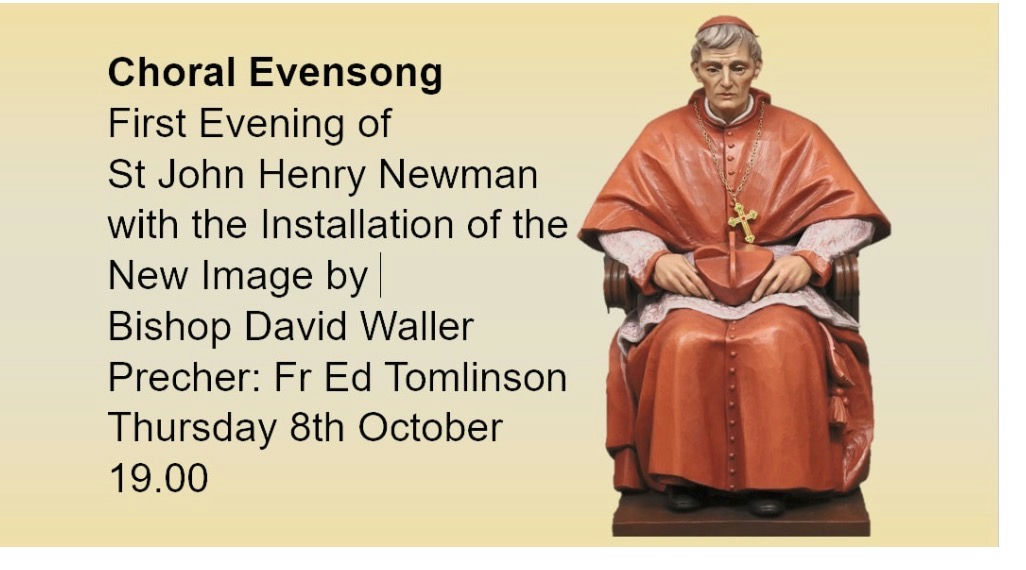
Newman describes how a childhood hand sketch on the cover of his school Latin verse book “almost took my breath away.” He realized, with pleasing astonishment, how far back the roots of his Marian spirituality stretched as he gazed at the pencil drawing of “a set of beads suspended with a little cross attached.” While Newman was unsure why he had produced this art work, it was poignant reminder to him of the ‘trace of Providence’. A few days before the 34th Anniversary of his reception into the Catholic Church, preaching to the boys at Oscott, on the Feast of the Holy Rosary, 5th October 1879, Newman reflects deeply upon how devotion to the Blessed Virgin Mary had shaped his journey of faith, hope and love: “Now the great power of the Rosary lies in this, that it makes the creed into a prayer” giving us the great truths of God’s “life and death to meditate upon, and brings them nearer to our hearts.” And so, “Our thoughts of Him are mingled thoughts of His Mother, and in the relations between Mother and Son we have set before us the Holy Family, the home in which God lived.” (Sayings of Cardinal Newman). Although not every convert felt as Newman did, they found him to be understanding of their position and pastorally astute in his advice.

Writing to George Ryder, when living in Maryvale, a few years after his own conversion on 19th September, 1848, Newman recommends that he use his imagination to visualize each Gospel passage the Rosary Mysteries recall. As well as recommending that Ryder focuses on the words of the Our Father and Hail Mary not in themselves, but rather as a kind of ‘mantra’, whereby the exact recitation embeds the grace being imparted by the contemplation of individual scriptural scenes being recalled:
I certainly think you should get into the Catholic ways of devotion by degrees. Perhaps you would feel the Rosary less trying, said with others. Certainly it would be better if you fixed a time for saying it, and kept to it. How do you say it? Try it thus, if you don’t so use it at present, but perhaps you do; viz before each mystery, set before you a picture of it, and fix your mind upon that picture, (e.g. the Annunciation, the Agony, etc.) while you say the Pater and 10 Aves, not thinking of the words, only saying them correctly. Let the exercise be hardly more than a meditation. Perhaps this will overcome any sense of tedium.” (Letters and Diaries XII, p.263).
Newman, after his eyesight was failing, was given permission by Bishop Ullathorne to substitute saying the Divine Office for meditating upon the story of salvation communicated by the recitation of the Rosary. By so doing he placed himself in the care of Mary, who inspired him to make her ‘let it be’ according to God’s will, more deeply his own. Writing some years earlier in 1878 to Mrs Bellais, Newman’s words reveal the fruits of his devotion to the Lord of all hopefulness, Lord of all Joy:
However, there is One above who reads your heart as no one on earth reads it, who will supply all its needs, and can and will do more for those, whose future is so anxious to you, than could have been done for them, had every thing happened as you wish. So do not be cast down, but put your trust in God, and be sure that every thing that happens in the best way for those who love Him. (Letters and Diaries, XXII, p.247).

Newman describes how a childhood hand sketch on the cover of his school Latin verse book “almost took my breath away.” He realized, with pleasing astonishment, how far back the roots of his Marian spirituality stretched as he gazed...
The 2025/6 Organ Recital Series at the Ordinariate and Parish Church of the Most Precious Blood Church, London Bridge begins with a recital for Voice and Organ on Saturday 4 th October at 12:30pm. Richard Pinel (Organ) and Katherine
Nicholson (Mezzo-Soprano) have devised a programme which has a distinctly French flavour and includes Les angélus by Louis Vierne and Olivier Latry’s Salve Regina along with some solo organ pieces.
The line-up for the rest of the season is:
The 50 minute long recitals are free (with a retiring collection) and start at 12:30pm. The Church is close to London Bridge station and numerous bus routes. The recitals are also broadcast on our YouTube channel.
Further details can be found on our website.
The 2024/25 season had a rather special ending in May when Jan Liebermann played a very demanding recital (demanding for both player and organ!). His performance at MPB, along with many others, is available here.
Further information can be found on the event poster below.

The 2025/6 Organ Recital Series at the Ordinariate and Parish Church of the Most Precious Blood Church, London Bridge begins with a recital for Voice and Organ on Saturday 4th October at 12:30pm.
Dear Friends,
This month we celebrate the Feast of Our Lady of Walsingham. Many of you will remember the joy we all felt when it was announced that the Ordinariate was dedicated to Our Lady of Walsingham. Pilgrimage to Walsingham and devotion to Our Lady under that title has played a major role in our lives both as Anglicans and as Catholics; it has been a place of fun and laughter and also of happiness and tears as we have followed in the footsteps of countless pilgrims down the ages, bringing the complexities of our lives to the Mother of God. Indeed I am convinced that the Ordinariate is the answer to so many prayers offered at the shrine.
When we go to Walsingham, ours eyes are confronted with ruins. The abbey and surrounding buildings were destroyed on the orders of Henry VIII and those who refused to abandon Papal authority were executed. As the pilgrim hymn states “this land which had once been Our Lady’s own dower; had its church now enslaved by a secular power”. The hymn tells of the years of darkness and the silent pilgrimages of the few; but then the hymn becomes more triumphalist, telling of the restoration of the shrine and there establishment of pilgrimages – but those last verses miss an important point, a verse which was never written but without which the story is not correct “ this land which had once been Our Lady’s own dower, has a church STILL enslaved by a secular power”. For many of us this has been our story and our understanding: no amount of restoration could remove the stark fact that we were still separated from the See of Peter: a scandal and a deficiency that had to be healed.
The Ordinariate puts this right: it acknowledges our history even whilst in separation, it values that patrimony whereby we were nurtured in the Catholic Faith. At the same time, the Ordinariate heals the schism. That which was lost at the reformation becomes possible again and we are privileged to live to see this day, to enter into an ecclesial life for which so many of our forebears prayed.The Ordinariate of Our Lady of Walsingham is the answer to so many prayers offered at her feet and we can be confident that our future lies in so many more prayers to be left at the same feet.May Our Lady of Walsingham pray for us and for the conversion of England.
In Christ,
+ David
Image credit | © Mazur/catholicnews.org.uk

Dear Friends, This month we celebrate the Feast of Our Lady of Walsingham. Many of you...
Newman loved his daily walks on his own, or being joined by others to chat, think through problems, pray and while riding, compose homilies and addresses. He described the holiness of nature as a “Temple” or “vast Cathedral”:
“Does not the whole world speak in praise of God? Does not every star in the sky, every tree and every flower upon the earth, all that grows all that endures, the leafy woods, the everlasting mountains, speak of God…” (Parochial and Plain Sermons, V: p.21).
Newman celebrates the glory of creation, in its fulsome late summer bloom, when commenting to W.J. Copeland, from the same setting:
“The green is of a thousand hues, as the corn begins to turn - the heather is purple and the mountain berries are in profusion.” (LD XX, p.262)
Newman also found, in nature, a fruitful source of analogy to describe the development of virtue in different people:
The soul which is quickened with the spirit of love has faith and hope…one and all exist in love, though distinct from it; as stalk, leaves and flowers are as distinct and entire in one plant as in another, yet vary in the quality, according to the plant‘s nature. (Parochial and Plain Sermons IV, 21)
Newman viewed his frailties as an invitation to engage with the cross. He recognized hints of the paschal mystery in the cycles of birth, death and rebirth in creation and concludes:
As on a misty day, the gloom gradually melts and the sun brightens, so have the glories of the spiritual world lit up this world below. The dull and cold earth is penetrated by the rays. All around we see glimpses of reflections of those heavenly things, which the elect of God shall one day see face-to-face. (The Heart of Newman, Erich Przywara, p.307).
Let us share, in a disciple-like ‘transfiguration’ moment, and gaze through Newman’s looking-glass reflection of the Eastern Fathers of the Church:
Christ came to make a new world. He came into the world to regenerate it in Himself, to make a new beginning to be the beginning of the creation of God, to gather together in one, and recapitulate all things in Himself. The rays of His glory were scattered through the world; one state of life had some of them, another others. The world was like some fair mirror, broken in pieces, and giving back no one uniform image of its Maker. But He came to combine what was dissipated, to recast what was shattered in Himself. He began all excellence, and of His fulness have all we received. (Sermons of the Day, 61).

Newman loved his daily walks on his own, or being joined by others to chat, think through problems, pray and...
We are grateful to the Walsingham Association and the Catholic National Shrine and Basilica of Our Lady of Walsingham for including the Personal Ordinariate of Our Lady of Walsingham in a new national prayer initiative uniting Catholics across the country.
Each week, members of the Association are invited to pray for a particular diocese or ecclesial family by reciting the Prayer of the Walsingham Association, asking the intercession of the Blessed Virgin Mary.
The week beginning Sunday 17th August has been dedicated to the Ordinariate. This is a moving and encouraging gesture of support, and we are deeply grateful for their prayers.
The Shrine is broadcasting the prayer daily at 10am via their livestream, and the weekly intentions and prayer audio are also available at: walsinghamassociation.org.uk/prayer_podcast.
We warmly encourage all members of the Ordinariate to take part in this initiative—joining in prayer, sharing it with others, and remembering all those taking part in the Walsingham Association’s wider spiritual outreach.
Our Lady of Walsingham — pray for us.

Ordinariate Included in National Prayer Initiative Led by the Walsingham Association
The Jubilee Pilgrimage of the Ordinariate of Our Lady of Walsingham, led by Bishop David Waller, will take place in Rome on 8-10 October 2025. This includes the Feast of our Patron, St John Henry Newman, with Mass celebrated in Newman's own titular Church of San Giorgio in Velabro. Participation in all or any of the pilgrimage ceremonies is free (except for the tour of the catacombs). Pilgrims will organise their own transport to (and around) Rome and arrange their own accommodation.
PILGRIMAGE SCHEDULE
WED 8 OCTOBER
5pm - Welcome of foot pilgrims by Bishop David Waller
5.30pm - Solemn Evensong, Venerable English College
THU 9 OCTOBER - FEAST OF ST JOHN HENRY NEWMAN
Solemn Mass - 10am
1pm - Church of San Giorgio in Velabro Procession along Via della Conciliazione to St Peter's Basilica, Veneration of relics of St Peter, enter through Holy Door
FRI 10 OCTOBER
9.40am - Meet at Catacomb of Callistus for 10am tour, concluding with Mass followed by an optional walk to Basilica of St John Lateran
To register an interest in participating, and to be kept informed of an optional informal dinner, and other arrangements in Rome, please scan the QR code on the attached document or click here.

The Jubilee Pilgrimage of the Ordinariate of Our Lady of Walsingham, led by Bishop David Waller, will take place in Rome on 8-10 October 2025...
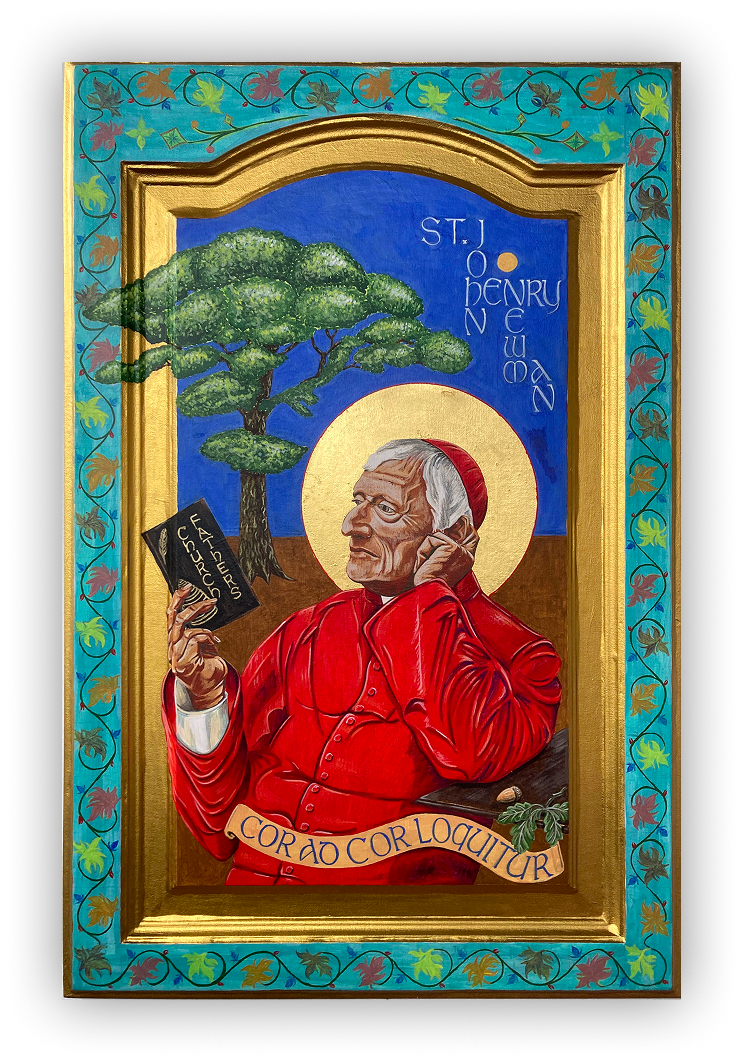
The Holy See has announced that St John Henry Newman, Patron of the Personal Ordinariate of Our Lady of Walsingham, is to be declared a Doctor of the Church, becoming the 38th person to receive this title and only the second Englishman after St Bede. The formal proclamation will take place later this year.Newman’s life was marked by a deep search for truth. Born in London in 1801, he served as an Anglican priest before entering into full communion with the Catholic Church in 1845. He went on to become a cardinal, a theologian of lasting influence, and a poet. Canonised in 2019, he is known for his writings on the development of doctrine, the primacy of conscience, and the role of education in the life of faith.The title of Doctor of the Church is granted to saints whose teaching is considered of particular importance for the whole Church. Newman’s insights into faith and reason, the call to holiness, and the witness of the laity continue to inspire Christians around the world.
Collect for the Feast of St John Henry Newman
O GOD,
who didst bestow upon thy Priest Saint John Henry Newman,
the grace to follow thy kindly light and find peace in thy Church:
graciously grant that, through his intercession and example,
we may be led out of shadows and images
into the fulness of thy truth;
through Jesus Christ thy Son our Lord,
who liveth and reigneth with thee,
in the unity of the Holy Spirit,
ever one God, world without end. Amen.

The Holy See has announced that St John Henry Newman, Patron of the Personal Ordinariate of Our Lady of Walsingham, is to be declared a Doctor of the Church...
The Ordinariate was honoured to take part in the WeBelieve Festival, an extraordinary celebration of Catholic life that gathered together every strand of our rich and diverse Church. Held at St Mary’s College, Oscott - where St John Henry Newman preached his famous Second Spring sermon - the festival was a deeply symbolic setting for this moment of unity and renewal.

At the heart of the weekend was the celebration of three monumental milestones: the Jubilee of Hope, the 175th anniversary of the restoration of the Catholic hierarchy in England and Wales, and the 1700th anniversary of the Nicene Creed. These themes resonated powerfully during the Ordinariate’s Evensong in the Oscott chapel, where the ancient liturgy found its voice again in a spirit of hope, joy, and shared faith.
The presence of the Ordinariate among such a wide array of Catholic expressions testified to the Church’s harmony in diversity-an embodied “second spring” moment for our times. As Bishop David Waller described, it was “exhausting, but in the most wonderful sense,” as there hadn’t been “a spare moment,” but everywhere you looked was “Catholics from so many different places, groups, and contexts… all together.” Despite their differences, he noted, “you realise that even though we do things differently or have different charisms, these are our brothers and sisters, fellow evangelists.”
The festival was also a significant return to Oscott for the Ordinariate. “It was here that Cardinal Newman gave his great sermon on the Second Spring,” Bishop David reflected. “Many years later, I believe we - the Ordinariate - are in some sense fruit of that moment.” He also recalled the historic visit of Pope Benedict XVI in 2010, who concluded his apostolic journey at Oscott with a personal plea to the bishops of England and Wales to support what was then only a vision. “His final words really were to commend the not-yet-established Ordinariate to the bishops and ask them to be generous. So to be here, where that was said, is very special.”

Monsignor Dr Michael Nazir-Ali, now a member of the Ordinariate and Prelate to the Holy See, brought deep insight to several of the weekend’s key discussions. Formerly the 106th Anglican Bishop of Rochester and previously Bishop of Raiwind in Pakistan, he served in the House of Lords from 1999, engaging actively in national and international affairs. He is now President of the Oxford Centre for Training, Research, Advocacy and Dialogue (OXTRAD). At the festival, he spoke on the panel Peace on Earth: Bearing Witness Amid Persecution with Bishop Habila Daboh (Zaria) and Dr Caroline Hull (ACN), delivered a talk titled From where have we come and where are we headed?, and offered reflections in What we believe and why: The Nicene Creed – past and present.
Bishop David also reflected movingly on the nature and beauty of the Ordinariate itself. He described it as “a testimony to the generosity of the Catholic Church”-a structure born not of compromise, but of conviction. For many former Anglicans, he said, “unity wasn’t just a nice idea… it was essential. Communion with the See of Peter was essential to living the Christian life.”
He recalled the moment when Rome responded with what he called “overwhelming generosity.” What emerged was not a tentative or temporary bridge, but something whole and enduring: “What Rome offered looks very much like the end goal of Christian unity… It’s very small, and it’s pathetically small on one level, but it’s whole. It’s complete.”
Bishop David explained that the Ordinariate is “very much like a diocese,” made up of those who “bring certain traditions - certain treasures, as Pope Benedict called them - but we leave the heresies behind.” In return, they receive “full communion, sacramental validity, the riches of the Church.” Reflecting on the deeper meaning of the journey, he added: “It’s taken us years to really look back and recognise the things that, even while separated, nurtured us in the Catholic faith. Those things… are treasures to share.”

When asked to describe the We Believe Festival in just three words, Bishop David answered without hesitation: “Full of hope.”
You can watch a summary of the Festival here.

“It was here that Cardinal Newman gave his great sermon on the Second Spring,” Bishop David reflects. “Many years later, I believe we - the Ordinariate - are in some sense fruit of that moment.”
In all things, Ronald pointed others to Jesus Christ. He was at his heart an evangelist, an evangelist first of all in the Church Army, and then in holy orders in the Church of England, in parishes in Bicester, Washwood Heath, and Wild Green; and then most recently in the Ordinariate of Our Lady of Walsingham.
Back in 1992, we were desolate, a group of people looking for support, leadership, direction and so on. And Ronald was one of those who jumped in, who became, as it were, a giant in the land. He gave himself tirelessly to his parishes, to his work in the See of Ebbsfleet, in particular at those lay conferences and so on. Also working tirelessly in the production of those children's liturgy sheets, creating a way of making sure that our young children were invested in, that there was a way of
delivering a sound catechesis to them, even as we struggled in our journey ahead.
Ronald was always at Forward in Faith events, as a dean, and also at National Assemblies, always stirring us up with the good news of Jesus Christ. Ronald also was one of those pioneers, those of us who came in that first wave, into the Ordinariate and here, too, Ronald gave himself tirelessly for the gospel. He was committed to developing communication and this bore fruit in The Portal magazine, - those visits to the groups, so important, particularly in those early days, - ensuring that we had a common identity; we weren't just individuals and isolated communities, but had so much to bind us together.
Ronald instigated the podcast, so that people could participate in the Ordinariate - not just those who were In Church on Sunday mornings, but the isolated, the housebound, the sick, and so on.
We owe Ronald a great deal, as we reflect on his legacy - a legacy which is very beautiful, but slightly strange in concept to the secular world. Ronald's enduring legacy will not be the things per se that I've just outlined, (important and essential though they are) and in our generation they have meant so much. But the legacy is the lives Ronald touched. The legacy is the number of people who in some way through him, not necessarily only through him, but through his ministry, his ordained ministry, his ministry in the Ordinariate, those who have been directed, pointed by Ronald to Jesus Christ. People who have seen through Ronald’s love, his care, a pointer to Jesus Christ. In planning his funeral, Ronald said very pointedly, “you know, there will be a short eulogy, but apart from that, make everything point to Jesus Christ, everything point to our salvation, everything point to the gospel.”
As we entrust Ronald to God, let us give thanks for our own encounters with him. Let us pray from the depths of our hearts for Jenny and the family. But let us rejoice in all those souls who in very different ways have drawn closer to Jesus Christ through the witness of that evangelist Ronald Crane.

In all things, Ronald pointed others to Jesus Christ. He was at his heart an evangelist, an evangelist first of all in the Church Army, and then in holy orders in the Church of England, in parishes in Bicester, Washwood Heath, and Wild Green; and then most recently in the Ordinariate of Our Lady of Walsingham...